Burned Out, Exhausted, and Can’t Sleep? Here’s What Meditation Actually Does to That Cycle

Sheenam Midha
Writer
May 19, 2026 · Updated May 19, 2026
You are already feeling sleepy. You've been going to bed a little earlier, cutting back on caffeine, even if you've turned your phone off before bed, and you still feel like you didn't get to sleep. It doesn't always have to be your sleeping pattern, the problem is. It's the constant stress and digital overload that accompany you to bed at night, and keep your nervous system in overdrive long after the job is done.
All of the burnout, digital fatigue, and bad sleep don't play nice with each other. Together in quick succession, each makes the other worse. But what most people don't realize is that there's a tool with solid research behind it that helps them with all three, but not by putting yet another item on their to-do list; it's about how they're reacting to stress in the first place. The tool is Meditation. This blog explains in detail how it works and where to begin.
The Loop Nobody Warned You About
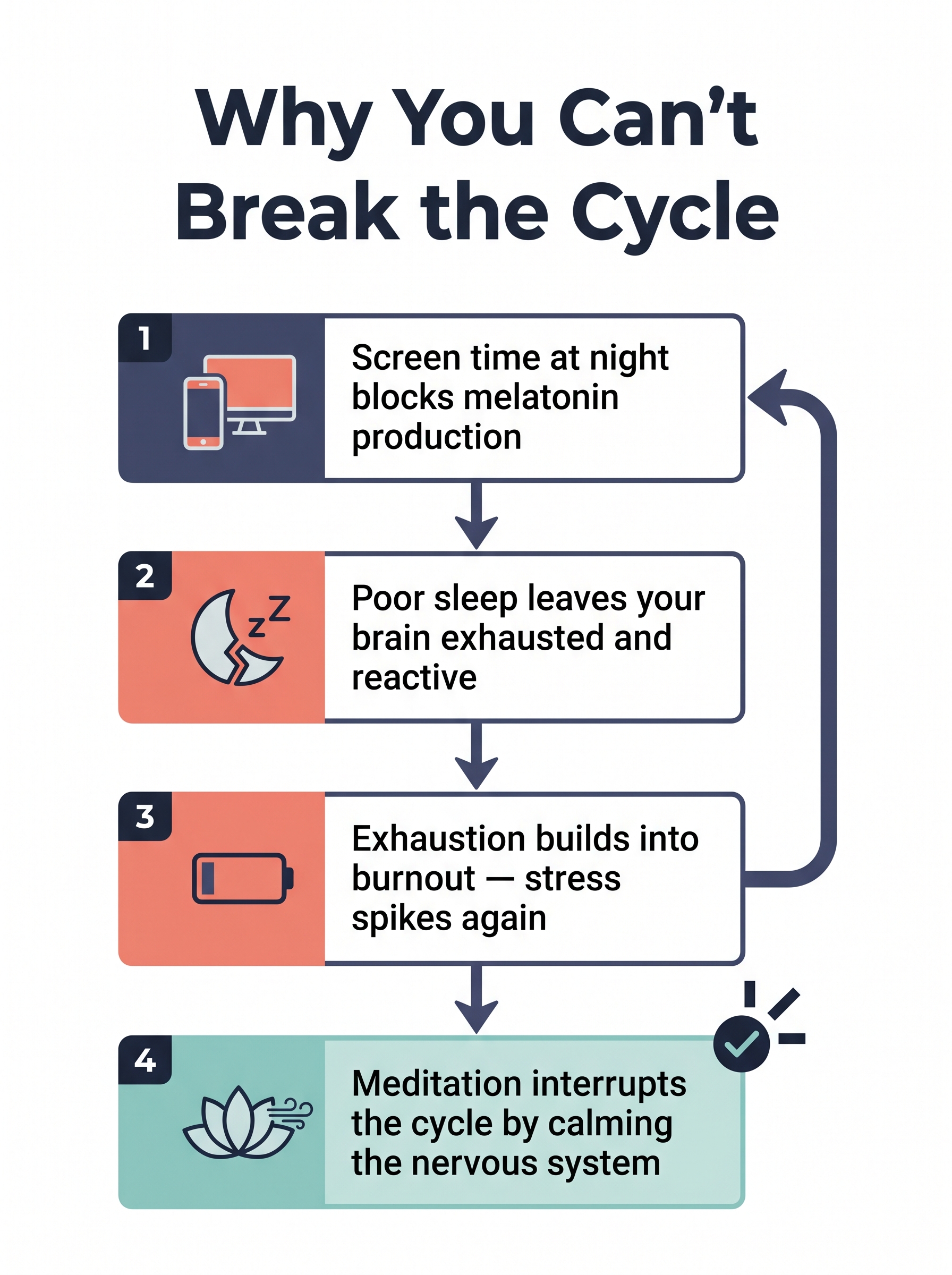
High cortisol levels at night impair sleep. Bad sleep makes the following day's work more difficult, thereby increasing stress. The blue light your eyes see before bedtime and the following hours after you turn off your phone. You're never given the signal that the day is done by your nervous system when you're always available. All of these problems are linked to each other, and meditation is one of the few things that will break the chain at the root.
What Meditation Does to a Burned-Out Brain
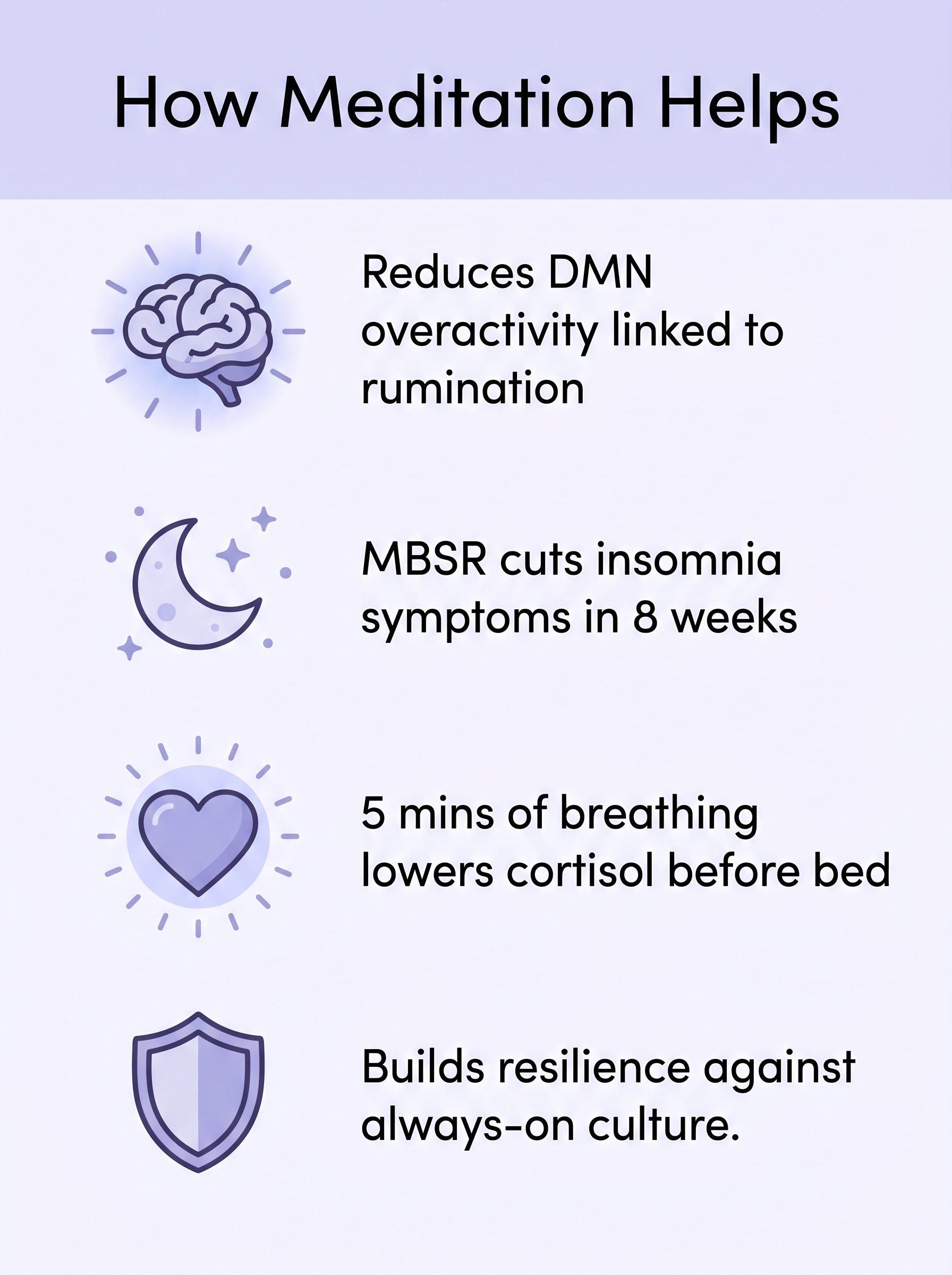
Burnout turns up the brain's default mode network (DMN), which is the network involved in rumination and mental replay. That activity is lowered by meditation. The brain activity, self-compassion, and burnout symptoms of healthcare workers in mBrainTrain's study with the WellMind platform changed measurably after they used it regularly. Look, most burnout guidelines focus on behaviour. Meditation takes it one step deeper: it's what your brain will default to when there's no demand on it.
Meditation and Sleep: The Research Is More Specific Than You'd Think
In a study published by JAMA Internal Medicine, adults who participated in an 8-week MBSR program experienced significantly fewer symptoms of insomnia and fatigue, similar to sleep medication, without the side effects. The heavy use of smartphones was associated with a decline in sleep quality among 400+ adults, with emotional stress caused by smartphone use being as significant as exposure to blue light, the study, published in the journal Frontiers in Psychiatry in 2025, concluded. Slow breathing just before sleep reduces cortisol and heart rate even after just five minutes. No app required.
Meditation for Burnout: What Actually Works
Not every meditation can help with burnout. These are the tips that tend to work and why.
1. Breath-focused meditation
The easiest meditation to begin with is breathing meditation. You're not going to go all the way to not think; that is not what meditation is about, and that is not the aim. You are learning to become aware when it is not right with you and bring your attention back to the breath. The noticing/returning practice is the very skill that is helpful for rumination. With practice, you'll become more skilled at interrupting your thinking pattern and coming out of it.
2. Body scan meditation
In body scan meditation, you'll focus your attention slowly on various points of your body. It is good for sleep onset, especially because it helps to distract from thoughts to physical sensations. It also helps develop the ability to identify the physical tension, without which an overworked individual might not be aware until it turns to pain.
3. Mindful breaks during the workday
The amount of cognitive load builds up until a break is taken, not a scrolling break, during the workday. Studies on the topic of burnout always indicate that healing takes place when one is working, not when one is not. It's a 10-minute break that requires no technology and will have a greater impact than a 10-minute break that involves social media.
4. Loving-kindness meditation
Loving-kindness meditation (also known as metta) is a powerful way to develop self-compassion, which may sound soft, but it is very hard on burnout. Burnout can be one of those things that you lose when you burn out: your capacity for being kind to yourself when you're human. The research referenced in mBrainTrain showed that meditation that focused on self-compassion was more effective in reducing burnout symptoms among healthcare professionals than mindfulness meditation. This is where to begin when you're in the self-criticism camp.
Using Meditation Apps: What's Worth Your Time
If you are tired and virtually fatigued, then you are not likely to begin by sitting in silence without any structure for 30 minutes. Apps help. However, they are very different.
The top two are Headspace and Calm, both of which have decent amounts of sleep content (sleep meditations, wind down routines, ambient sounds) and are used a lot in the US. In the world of workplace wellness, calm has been referenced for its sleep-aid properties. A comparison of Carepaths states that both apps have measurable stress reduction in consistent users, and the research basis for each of the apps' claims is different.
WellMind was found to produce measurable differences in brain activity and burnout scores in the group of healthcare workers in the mBrainTrain burnout study, who are a high-stress professional group. It's more focused on learning and clinical than Headspace or Calm.
The truth is, the best app is the one that you use. Platform is not important; consistency is. A meditation app that you download once and don’t use isn't as effective as 10 minutes of breath-focused meditation six days a week, using a free YouTube video.
What doesn't help: Meditating as another 'thing' that needs optimization. It's not about being a perfect or efficient meditator. The idea is to allow your nervous system to get some time out from the internet. That's it.
Practical Starting Point
If you're overwhelmed and need a starting point that doesn't call for previous experience, here's one week you'll be able to get started with:
Morning (5 minutes): Sit for a few minutes without looking at your phone and breathe into your awareness. Bring your attention back to your mind. Do not judge the wandering; it's expected.
Afternoon (2 minutes): At some time between 1 - 3 PM, turn off your screens. Repeat the process of taking slow breaths for 2 minutes. This is a "cortisol reset" and not a productivity tip.
Evening (10 minutes): Body scan at bedtime. Begin at the bottom and go up. Notice, don't fix. This will put your nervous system back into neutral.
No screens for the last hour before sleep. This is not meditation, but it may be used in conjunction with meditation. In the event that you are using your phone until you fall asleep, you have less to work with for a meditation practice.
The Bottom Line!
A vicious cycle of digital exhaustion, burnout, and sleep deprivation. There are various strategies to this problem, each tackling one aspect – improving sleeping habits, taking more breaks, attending a therapy session, exercising more – and each of these has its role.
The only thing about meditation is that it is unique in that it is attacking the root cause of all the other methods being ineffective because of the nervous system dysregulation. A burnt brain cannot be changed. Regular meditation alters the brain's "set point".
This is no 'magic' or 'enlightenment' assertion. It has to do with cortisol, the default mode network, and 10 minutes of real rest versus 10 minutes of scrolling each day.
Start small. Stay consistent. This cycle may be broken.
It will not be a "quick fix," but it will not be temporary. Meditation regularly decreases a person's baseline cortisol and diminishes rumination, which fuels burnout. A study of Health Care Workers in the use of WellMind found that with consistent practice, there was measurable improvement in the symptoms of burnout.
Most people report that they feel they have improved sleep after two weeks, especially when adding a screen-free wind-down routine with meditation. Programs using a structured approach, such as MBSR, demonstrate greater effects at 8 weeks.
The most effective meditations are those that focus on the breath; they are also body scans, which take a breath away from thoughts and bring it back to the body, exactly what screens do not do. You can begin at 10 minutes before bedtime and gradually increase.
If you use it on purpose, not. Do not browse; only open, do a session, and then close it. There are also a lot of guided meditations that can be downloaded as audio; then you can listen without being connected to the internet and leave the phone face down.
Yes. The always-on feeling is not just behaviour: it's a nervous system state of alert that is present all of the time, regardless of whether you are getting messages or not. That's something that notification boundaries can't do: Meditation trains you to become aware and to leave that state.
A racing mind is not abnormal; it is a normal attribute to the process of racing, and nothing to be solved before getting into the process. The practice is to notice when you've drifted and to go back to the breath in the moments following each drift, and repeat this, not a sign that it is going wrong.
Related Sessions
7 Signs You’re Actually Meditating Correctly
· Focus
Walking Meditation: A Guide for People Who Can't Sit Still
· Focus
Mindfulness vs. Transcendental Meditation: Finding Your Perfect Practice
· Focus
How to Meditate at Work Without Anyone Noticing
· Focus
The Connection Between Meditation And Heart Health
· Sleep
Guided Vs Silent Meditation: Which One Actually Works For You?
· Focus
Morning vs. Night: When is the Best Time to Meditate?
· Sleep
How To Manage High-Functioning Anxiety With Meditation
· Anxiety
5 Common Meditation Myths That Hold You Back
· Anxiety
The Science of Breathing: How Pranayama Changes the Brain
· Anxiety
10 Mindfulness Exercises for Busy Professionals
· Sleep
Related
7 Signs You’re Actually Meditating Correctly
Walking Meditation: A Guide for People Who Can't Sit Still
Mindfulness vs. Transcendental Meditation: Finding Your Perfect Practice
How to Meditate at Work Without Anyone Noticing
The Connection Between Meditation And Heart Health
Guided Vs Silent Meditation: Which One Actually Works For You?
Morning vs. Night: When is the Best Time to Meditate?
How To Manage High-Functioning Anxiety With Meditation
5 Common Meditation Myths That Hold You Back
The Science of Breathing: How Pranayama Changes the Brain
10 Mindfulness Exercises for Busy Professionals